
Journey to Khaybar Fort: History, Hospitality, and the Saudi Desert
Embarking on a day tour from Medina, my goal was to explore Khaybar, a place steeped in history and religious significance. For two or three days, I had been immersed in Medina’s serene atmosphere, but today, a new adventure beckoned. Khaybar, approximately 180 kilometers away, promised an immersive experience into a pivotal historical site.
The Battle of Khaybar, fought between Muslims and Jews, saw the conquest of Khaybar Fort by Hazrat Ali (RA). My mission was to witness this ancient stronghold before sunset. The journey, estimated at around two hours on a clear highway, required an early start to make the most of the day, especially with temperatures soaring between 35 and 40 degrees Celsius.
The Road to Khaybar: Scenery and Surprises
The ride from Medina presented its own unique challenges and beauties. Navigating the highway required careful lane switching, as drivers here do not easily yield. Soon, we were out of the city limits, and the landscape began to transform.
My favorite stretch of road on the city’s outskirts boasts an abundance of trees, a rare sight that creates a distinct atmosphere in the desert. Not just date palms, but also Neem trees and other varieties line the route. Medina itself, I discovered, is surprisingly mountainous, though the peaks are not green. This contrast of desert and elevation lends a captivating beauty to the region.
One striking observation along the way was the sheer number of cameras at every traffic signal. I counted an astonishing 18 cameras at a single intersection, a concentration I had not witnessed anywhere else in the world. They likely serve various purposes, from monitoring seatbelt usage to enforcing traffic light compliance.
Despite the heat, the ride on the motorcycle proved bearable, thanks to the moving air. My bike, affectionately named Rangeeli, was ready for the 360-kilometer round trip, maintaining speeds between 90 and 120 kph. Without any luggage, the average speed was a comfortable 110 kph, allowing us to cover ground swiftly.
The scenery was a constant delight, changing every 15 to 20 kilometers. Mountains, small villages, and verdant date orchards appeared in succession, ensuring the journey remained engaging. After covering roughly 30 kilometers, we passed a check-post, an important marker on the route towards Khaybar.
Signs indicated Khaybar was 150 km away, Al-Ula 350 km, and Tabooq further still. We had already completed about 90 kilometers, halfway to our destination, with the landscape continuing to impress.
An Unexpected Stop: Local Hospitality in the Desert
Our first significant stop since leaving Medina was a large village, complete with a school. After miles of open road, this settlement was a welcome sight. We pulled over, needing cold water to combat the desert heat. Though we carried bottles, they had long lost their chill.
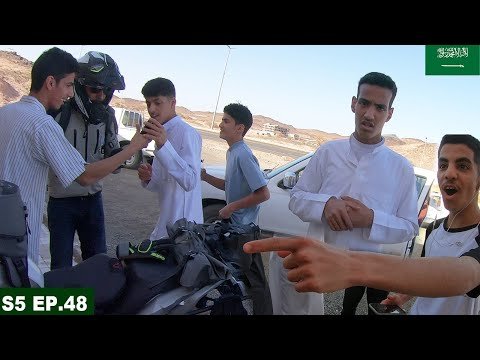
As we rested and refreshed ourselves, something extraordinary happened. Locals, including many excited children, gathered around. It turned out that my presence as a traveler was recognized, and people began to assemble from all directions. A young boy even shared a picture on Snapchat, further drawing a crowd.
What began as a quick 5-10 minute water break stretched into a half-hour of genuine connection. Despite having just bought drinks, the villagers insisted we accept their offerings, embodying the profound hospitality of the region. They even urged us to stay the night, a testament to their warmth. We promised to return after our visit to Khaybar.
Arrival in Khaybar: A Glimpse of the Ancient City
Passing through the Khaybar gate marked our entry into the city limits. Yasir bhai, navigating, led us deeper into Khaybar. The city entrance itself was beautiful, transitioning into a main area adorned with a striking square featuring artistic depictions of teapots—a widely recognized symbol of hospitality in Arab countries, reminiscent of similar sights I encountered in Iraq.
The Saudi government is actively promoting tourism, particularly in Al-Ula, and it’s clear that cities like Khaybar, lying along these routes, are undergoing significant development and renovation. The city, though not overpopulated with around 50,000 residents, radiates an air of transformation.
As we continued, the landscape shifted dramatically. Large, black magma rocks dominated the surroundings, a geological feature that began appearing some 20 to 25 kilometers prior. We observed numerous old houses, some in disrepair, others seemingly undergoing renovation, hinting at the area’s ancient past and current revitalization efforts.
Khaybar Fort: A Historical Enigma
Our anticipation grew as we approached what appeared to be the fort area. However, our excitement was soon met with disappointment: the fort was closed. Despite our pleas, explaining our long journey and even attempting emotional appeals, entry was strictly prohibited.
This magnificent historical site, an area of old houses and date orchards, lay behind walls we could not cross. We tried to find a vantage point to capture a glimpse of the fort, which remained hidden behind these settlements. Police presence made it clear that even standing near the restricted areas was not permitted, and drone use was also forbidden.
The area surrounding the fort revealed more insights into its past. Within the date orchards, ruins of old houses dotted the landscape, some constructed with the distinctive black magma rocks we had seen on our approach. This entire region, with its ancient structures and unique geology, offered a powerful sense of history, even from a distance.
Yasir bhai mentioned that construction and renovation work has been ongoing for 8 to 10 years, and entry, once possible, is now restricted without special permission. Although we couldn’t enter, the views from the perimeter were captivating, showcasing the blending of ancient ruins and natural beauty.
The Enduring Legacy of Khaybar
Despite the restricted access, the historical significance of Khaybar permeated the atmosphere. This land was once home to Jewish tribes, notably the Banu Nadir, who cultivated date trees and developed agriculture, transforming the area into an oasis.
These tribes constructed several forts, ingeniously connecting them with secret pathways. These tunnels served as vital conduits for supplies during sieges, ensuring the forts remained provisioned and secure. Fearing an attack from Medina Muslims, the Banu Nadir united various Jewish tribes, planning a preemptive strike against Medina.
Upon learning of this conspiracy, Prophet Muhammad (PBUH) dispatched spies to gather intelligence. With the plot confirmed, Muslim forces, led by Hazrat Ali (RA), marched to Khaybar. They laid siege to the forts, but the secret pathways allowed the besieged to share resources.
Ultimately, insider information from some Jewish individuals led to the Muslim victory. Historical accounts state that 16 to 18 Muslims were martyred, while 93 Jewish combatants were killed. Even after the battle, Jewish communities continued to reside here, and the famous Khaybar dates were exported to Medina for a long time.
Return to Medina and a Warm Welcome
As sunset painted the sky, we began our journey back to Medina, a feeling of slight disappointment lingering over the restricted access to the fort. We had spent hours attempting to find a suitable viewpoint for a proper look, but every approach was blocked.
The drive back to Medina Munawra took another two hours, bringing us to 10 PM. We covered a round trip of approximately 400 kilometers in one day, a substantial distance on a motorcycle. The smooth roads made the ride comfortable, and we managed two short breaks on the return leg, thanks to driving faster at night.
Despite the fatigue from the long day, a delightful evening awaited us. Abdur Rehman and Abdur Rauf, who I met at a gathering the previous day, had insisted we join them for dinner. Their children, eager for a feast, had helped convince us to accept the invitation.
Their hospitality was overwhelming. For dinner, we enjoyed delicious kebabs, a fresh salad, and though the planned mutton biryani had to be scaled down due to a lack of mutton, a tasty version was still presented. Cookies and cold coke completed the meal. Abdur Rehman and his family ensured we felt truly at home, making for a perfect end to a long, eventful day.
My journey to Khaybar Fort offered a profound blend of historical exploration and heartwarming human connection. While the fort itself remained a tantalizing mystery from the outside, the rich history of the land and the incredible hospitality of its people left an indelible mark on my memory.