A New Perspective on Antarctica’s Viral Penguin
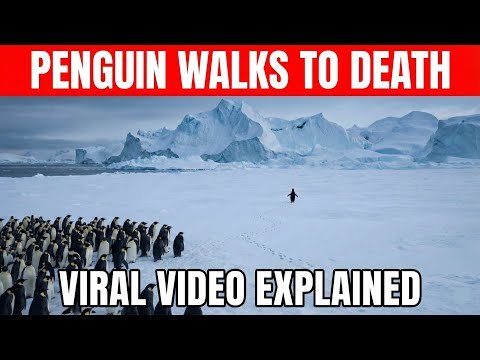
A recent clip of a penguin walking alone through the icy expanse of Antarctica has resonated deeply across social media platforms. Many viewers find profound meaning in this image, interpreting it as a symbol of freedom, isolation, or even a profound existential choice.
However, the actual background of this footage reveals a different and equally compelling story, rooted in scientific observation and documentary filmmaking. This viral moment has a specific origin, and its scientific context offers a fresh understanding.
The Documentary Source: Encounters at the End of the World
The acclaimed footage originates from the 2007 documentary “Encounters at the End of the World.” German filmmaker Werner Herzog directed this production, capturing moments from Antarctica, one of Earth’s most extreme environments.
The documentary delves into various aspects of life in Antarctica, highlighting the work of scientists, the unique conditions of the environment, and unusual behaviors observed at the planet’s edge.
An Uncharacteristic March: The Adélie Penguin’s Deviation
Within the documentary, a particular scene captures an Adélie penguin acting in a highly unusual manner. This individual penguin walks away from its colony and also away from the ocean, heading inland.
Instead of seeking food and survival in the marine environment, the penguin moves toward Antarctica’s icy mountains. This direction defies biological logic for a penguin, as inland Antarctica provides no food source and likely leads to its demise.
Scientific Explanations for Rare Penguin Behavior
Scientists interviewed within the documentary explain that such behavior is extremely rare among penguins. Penguins are highly social animals, relying on their group for survival.
- Disorientation
- Illness
- Neurological issues
- A behavioral anomaly
Experts found no evidence to suggest the penguin made a conscious or emotional choice in its solitary walk.
Human Interpretation Versus Natural Reality
Despite the scientific context, the internet quickly assigned a new identity to the penguin. Viewers began labeling it the “nihilist penguin,” the “existential penguin,” or the “lonely rebel.” People projected human emotions onto the clip, transforming it into a metaphor for isolation, freedom, depression, or resistance.
Truth Spell notes that this viral interpretation often reflects more about human psychology than animal behavior. Experts confirm that animals do not operate on philosophical concepts like purpose or rebellion. The penguin was not making a statement; it simply displayed a rare and tragic deviation from normal behavior.
Werner Herzog’s Vision of Nature
Werner Herzog included this scene in his documentary because he finds fascination in nature’s strange facets. His films frequently showcase moments where life appears mysterious, unsettling, and difficult to fully comprehend.
Herzog consistently avoids romanticizing nature. Instead, he portrays it as indifferent, chaotic, and occasionally cruel, reflecting a raw, unvarnished reality.
Beyond the Metaphor: Understanding Antarctica’s Wildlife
The viral penguin footage is real, originating from an authentic documentary. However, the profound, symbolic meaning attached to it is largely a human creation. It serves as a reminder of our tendency to transform natural occurrences into metaphors, especially within the context of social media and short-form content.
Understanding the facts behind this widely shared moment allows us to appreciate the complexities of animal behavior in Antarctica, distinguishing scientific reality from human-assigned symbolism.