
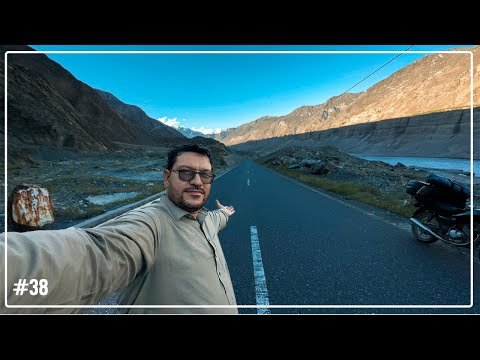
Conquering the Road to Gilgit: A Solo Bike Adventure Through Northern Pakistan’s Rugged Beauty
Embark on an unforgettable journey with seasoned traveler Yahya Khan as he navigates the demanding route from Swat to Gilgit. This isn’t just a road trip; it’s a test of endurance, a visual feast of breathtaking landscapes, and a deep dive into the heart of Northern Pakistan’s challenges and charms. While the 370-kilometer distance might seem manageable, the path through mountains and valleys promises a rigorous 12 to 14-hour expedition by bike.
Prioritizing Safety: Navigating Northern Pakistan’s Treacherous Passes
The journey begins with a crucial warning, highlighting the importance of safety when traversing these majestic yet sometimes perilous regions. Recent incidents underscore the need for vigilance, especially in certain high-altitude areas.
Critical Travel Advice for Babusar Top and Chillas
Travelers are strongly advised against nighttime transit through Babusar Top and the Chillas area. Tragic events, such as the murder of a tourist reported behind a mountain near Chillas, serve as a grim reminder of the risks involved. It is imperative to plan your itinerary to ensure you spend nights safely in established towns like Naran or Gilgit, depending on your location. This isn’t an area to linger in after dusk.
The Challenging Road Ahead: Swat to Gilgit
The path from Swat to Gilgit is renowned for its demanding terrain, making it a true adventure for any motorcyclist. What seems like a straightforward distance transforms into a marathon against rough roads and unpredictable conditions.
Fuel Stops and Unexpected Shortages
The reality of remote travel often includes unexpected challenges. Yahya initially planned to refuel in Bisham, a seemingly large city, but to his surprise, petrol was unavailable. After riding for a considerable distance on reserve, the search for fuel became critical. Eventually, three liters of petrol were secured at 310 rupees per liter, a testament to the fluctuating availability and pricing in these areas. While general stores often stock petrol when pumps don’t, large cities can occasionally present unexpected shortages.
A Familiar Yet Transformed Route
For Yahya, this route marked a departure from his usual path via Naran and Babusar Top, a change he embraced to experience something new. His initial optimism about road improvements quickly tempered. While some sections showed better surfacing than in previous years, many stretches remained broken, dusty, and challenging. The ride demands constant attention, making it impossible to cruise or relax, a stark contrast to the easy flow of city roads.
Passing Through Dynamic Landscapes
The journey unfolds through diverse settlements and natural wonders, each telling a piece of the region’s story.
The Markets of Komila (Upper Dasu)
Riding further, the traveler reached Komila, also known as Upper Dasu. Yahya observed a significant transformation, noting how much larger and more bustling the market had become since his last visit. It’s a vibrant hub, reflecting the growth and dynamism of the area, earning it the title, “Door to Kohistan.” Amidst the warmth of Dasu, a local interaction led to the sharing of a heartfelt verse: “At every corner we meet thousands of well-wishers, Mohsin, in your town there are a lot of actors.”
The Happiness Tunnel and Lowari Pass Rules
A recently completed tunnel, playfully named “Happiness,” presented a smooth passage with a height of 5.1 meters and a mandatory speed limit of 30 kph. This modern infrastructure contrasts with older regulations, such as the 1980 law prohibiting motorcycles in the Lowari Tunnel due to safety concerns—a rule Yahya believes is ripe for change. This 1-kilometer-plus tunnel is a significant engineering feat in the region.
The Significance of Diamir Bhasha Dam Site
The route also passes through the site earmarked for the Diamir Bhasha Dam, a monumental project where the natural landscape is already perfectly set for water storage. Yahya shares a fascinating personal anecdote: his first online channel’s success in 2019 was directly linked to this dam. When a judge launched a public fund for its construction, the dam became a viral search term. Yahya’s previously unnoticed documentary on the project suddenly appeared in search results, garnering millions of views and thousands of subscribers, showcasing the unpredictable nature of online discovery. It was here, at the dam site, that Yahya, engrossed in capturing the moment, inadvertently left behind his jacket.
Arrival in Chillas and the Nanga Parbat Vista
The approach to Chillas brings travelers closer to one of the world’s most formidable mountains.
First Glimpse of Nanga Parbat: The Killer Mountain
Nearing Chillas, the majestic Nanga Parbat emerges into view. This iconic peak, revered as the “Princes of mountains” and also known by its starker moniker, the “murderer mountain,” commands respect and awe. Its imposing presence reminds all of the raw power of nature in this region.
Unexpected Road Closure in Chillas
Upon reaching Chillas, Yahya encountered a situation that underscored the earlier safety warnings: the road was closed. Tourists were halted due to an ongoing conflict, with the closure enforced since 6 pm. While there was talk of a possible convoy, authorities ultimately denied passage, reinforcing the strict advice against evening travel through this area. Yahya reiterates his critical advice for all travelers: avoid this road after 5 pm, or certainly after 6 pm, to ensure safety.
The Final Stretch to Gilgit
With the challenging Chillas section behind him, the final leg of the journey to Gilgit unfolds, not without its own set of trials.
The Never-Ending Road of Tattapani
Continuing towards Gilgit, the road through Tattapani proves to be another test of patience. Described as perpetually under construction, it feels as if it will never be fully paved. Navigating its uncarpeted stretches, especially with the glare of other vehicles’ lights, adds to the arduous nature of the ride. After a grueling 14 hours, Yahya Khan successfully completed the 370-kilometer journey, arriving in Gilgit at 9 pm.
Upon arrival, a well-deserved rest awaited in a comfortable hotel room in Gilgit. The room, secured for approximately 1000 rupees, was neat, clean, and spacious enough to accommodate three to four people comfortably, providing a perfect sanctuary for recharging both body and camera equipment after the long ride. This epic journey from Swat to Gilgit, fraught with challenges but rich in experience, concludes with the promise of more unexplored beauty to come.