Motorcycle Travel in Zambia: From Zambezi River to Lusaka’s Logistics and Community
Starting the day at a beautiful lodge positioned right on the Zambezi River, marking the border between Zambia and Zimbabwe, WildLens by Abrar prepared for a significant leg of his travels. The plan was to head to Lusaka, the capital of Zambia, located approximately 175 kilometers away. The estimated travel time was around three hours, accounting for the initial 30 to 45 minutes needed to reach the main road from the lodge.
Breakfast was served in the lodge’s restaurant. An English breakfast was on the menu, featuring yogurt, cereals, fruits, and bread. Abrar noted that his days in Africa particularly don’t start without fruits.
Navigating Off-Road and Distances Covered
The first segment of the route involved an off-road section, requiring a slow and steady pace. His motorcycle, affectionately called Rangeeli, had accumulated a significant distance. The odometer read 70,133 kilometers, a notable achievement given that the motorcycle had only 36 kilometers when purchased from the BMW Munich showroom.
The areas surrounding the lodge had a sparse population, with residents primarily working in the lodges or on nearby banana crops. Most people live in Chirundu village. The sandy terrain presented a challenge, making progress difficult before reaching Chirundu.
During this off-road stretch, Abrar encountered a German cyclist. They exchanged greetings and discussed the challenging road conditions. The cyclist had taken a different “mountain road” from Lusaka, a route Abrar was advised against, much to his relief.
Chirundu Stop and a Police Encounter
Reaching Chirundu took about an hour and a half, including a 20-25 minute conversation with the German cyclist. In Chirundu, petrol prices were observed to be 34 Kwacha, equivalent to approximately 1.2 USD, which was notably cheaper than in Zimbabwe, where it cost about 1.5 USD. Overall, Zambia presented itself as a more affordable country for accommodation and food compared to Zimbabwe.
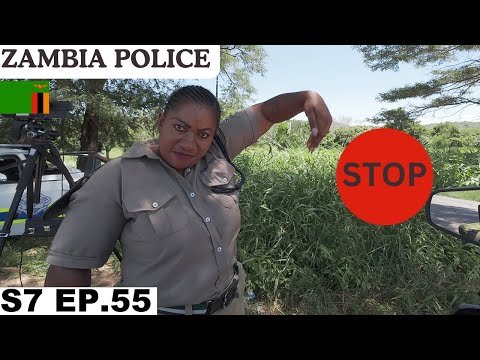
While on the road, Abrar was stopped by the Zambian police. They informed him he was traveling at 71 km/h in a 60 km/h zone. Although a sign for the 60 km/h limit was not immediately visible, the officers mentioned it was located near a large mountain with charcoal on the left. They explained that a ticket would be issued, payable within seven days via Nagobank. However, after a friendly conversation where Abrar explained his travels, the officers kindly allowed him to proceed without a fine. This positive interaction underscored his experience of African people being very friendly to tourists.
Arrival in Lusaka and Carnet Retrieval
Upon entering Lusaka, Abrar’s immediate priority was to pick up an essential document for his motorcycle, a Carnet. He navigated towards an industrial area on the city’s outskirts, where OS Motors, known to him through Basit in Dar es Salaam, was located. This Carnet had been sent from Germany.
The Carnet is crucial for entering South Africa and Botswana, as Abrar’s previous document was expiring this month. The processing fee for the new Carnet was 250 Euros, with an additional 90 Euros for shipping to Lusaka, totaling 340 Euros. He had also paid a 2500 Euro security deposit for his first Carnet, which remains active. Meeting Shahbaz Ibrahim, originally from Gujranwala, Pakistan, at OS Motors, Abrar successfully retrieved the document, ensuring his onward travel.
Exploring Lusaka: City Insights and Accommodation
The ride from the industrial area to his hotel covered about 12 kilometers, allowing Abrar to observe Lusaka. The city displayed high-rise buildings and appeared serene. Zambia, despite its large land area, has a population of around 20 million, with 3 million residing in Lusaka. The rest live in villages and smaller cities.
Abrar learned that the Kwacha had significantly devalued in recent months. The exchange rate was 27 Kwacha to 1 USD, a substantial drop from the 16-17 Kwacha to 1 USD rate observed a few months prior. Being a Sunday, many shops were closed. Lusaka, like other cities, offered a mix of urban development and nature. Zambia gained independence from the Rhodesian government in 1964, around the same time as Malawi.
His accommodation in Lusaka was a lodge where he secured a room for 45 US dollars. The room, though small, was clean, featuring changed bedsheets, a wardrobe, a table for working, a fridge, air conditioning, and tea/coffee facilities. The washroom was also clean. He planned to stay for one night, considering the price reasonable for the facilities provided.
Community Dinner and Farewell
Later that evening, Abrar experienced an unexpected and warm community gathering in Lusaka. He met numerous people at a Pakistani restaurant, enjoying good Pakistani food. Among them was Ammar, who brought special ‘Hydes’ mangoes, which Abrar found to be as sweet as those from Pakistan.
Abrar was impressed by the large presence of people from Gujarat, remarking on their well-settled status and successful businesses across East Africa, from Kenya to various cities and villages. The evening concluded with meeting Kashif from Chhattisgarh, India, and Anish from Baroj, India, further highlighting the diverse community present in Lusaka.