Discovering the Delta: Where Pakistan’s Mighty Indus River Meets the Sea
Embarking on a solo motorcycle adventure, Yahya Khan set out to trace the majestic Indus River to its ultimate destination: the vast embrace of the Arabian Sea. This journey reveals not just a geographical end point, but a tapestry of landscapes, unique cultures, and profound reflections on life’s own currents.
This critical junction marks the very beginning of Pakistan, with India’s Gujarat and its town of Lakhpat lying to one side, and Iran across the water on the other. It’s a place where land, river, and sea converge in a truly spectacular fashion.
The Mighty Indus: A River’s Epic Journey
Pakistan’s diverse mountain ranges give birth to numerous small streams, eventually coalescing into twelve rivers. These twelve then combine to form five major rivers, which, after countless kilometers, surrender their waters to the undisputed “King of Rivers” – the Indus.
I’ve been fortunate enough to witness many of these mountain ranges and their nascent rivers firsthand. My quest on this expedition was to follow the Indus as it completed its arduous journey, finally merging with the ocean.
Unexpected Encounters and Hidden Gems on the Road
My arrival in Sajawal city was late, around 8:30 or 9:00 PM, making the search for a suitable hotel a real challenge. The few rooms available were far from ideal for an overnight stay, yet sometimes, a traveler has no other option. The cold was surprisingly intense, a chill I hadn’t expected in Sindh, reminiscent of Peshawar’s winter.
Navigating the local routes presented a small challenge, especially discerning the difference between Shahbandar and Keti Bandar. Seeking advice from locals, I learned that Shahbandar offered little of interest, while Keti Bandar, reachable via Thatta, held more promise for my journey.
Crossing what appeared to be the Indus River, I noted its remarkably dry state. In winter, water is typically diverted at the Kotri Barrage, a site I’ve explored on a previous trip, leaving the riverbed here sparse. The roads offered glimpses into daily life, from precariously overloaded vehicles, a common sight despite safety concerns, to a funeral procession—a poignant reminder of human mortality.
Exploring Nature’s Bounty: Beyond the Usual Path
During my journey, I promised to showcase three unique trees whose fruits are familiar, but the trees themselves often unseen. Though I couldn’t find the third, I discovered two remarkable plantations.
The Coconut Grove
The first stop was an expansive coconut farm. While the sheer scale of the grove was impressive, the coconuts themselves were still unripe, likely to mature in June or July. This vast estate was presided over by an elderly “Wadera” (landowner), a prominent figure in the area.
My attempt to introduce myself and share the beauty of his land with a wider audience was met with an unexpected and rather rude dismissal. It was a stark reminder that even in beautiful places, human interactions can sometimes be challenging.
The Betel Nut Plantation
Further along, near the Gharo city bypass, lay the second unique discovery: a betel nut plantation. Unlike a typical tree, the betel nut plant is a vine, grown vertically on wooden supports, much like grapevines.
I had the pleasure of meeting Ishaq, a local farmer, who kindly explained the intricate cultivation process. He highlighted the importance of the overhead shade nets, crucial for protecting the delicate plants from the harsh sun. Ishaq confirmed that these valuable plants thrive almost exclusively in the coastal regions of Sindh, making this a truly special find.
Approaching the Delta: The River’s Last Stretch
The journey continued towards Baghan, which appeared to be the last sizable town before the river’s end. Accommodation here proved impossible to find. Faced with the prospect of nightfall, I considered my options, recalling a familiar trick: heading to the local mosque, a common sanctuary for travelers.
As I ventured further, the road became increasingly deserted, giving way to barren stretches and large chicken farms. The feeling of solitude, especially in the afternoon, brought a slight sense of trepidation.
I also observed locals drying vibrant red chillies in the sun, a practice that takes two to three weeks until they are fully cured.
Keti Bandar and the Delta’s Heart: Kharo Chhan
Eventually, I reached Keti Bandar, a place that, despite its grand name, was much smaller than anticipated. The sight of countless birds, circling and feeding on fish, reminded me vividly of Istanbul, a city I hope to visit again soon.
As dusk approached, a crucial detail emerged: Keti Bandar was not the final confluence point of the Indus. After securing some petrol and navigating language barriers with locals, I learned that the true end lay further ahead, in a place called Kharo Chhan.
The final leg of the journey to Kharo Chhan, however, presented an unexpected twist. The road simply ended, requiring a ‘launch’—a boat—to proceed. This discovery meant a significant detour and an overnight stay in the remote delta region.
A Night by the Sea and the Fishermen’s Catch
With darkness setting in, I found refuge in a solitary house near the sea. Despite the language barrier, my host, a kind old uncle, extended heartwarming hospitality. I spent the night on a traditional wooden charpai, covered by heavy blankets. It brought back memories of childhood, where the weight of such bedding provided a deeply restful sleep, a welcome contrast to modern, lighter coverings.
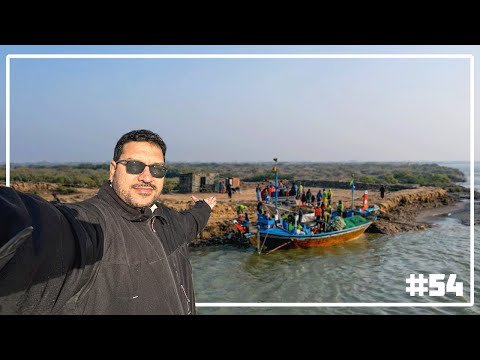
The morning brought a flurry of activity as local fishermen returned with their catches. Their small boats, called ‘launches’, were filled with ice to preserve the fish, mostly small Bangra. While it was fascinating to witness their livelihood, it also sparked a concern about the sustainability of catching such young fish, which could deplete future generations.
The Indus’s Final Embrace: A Poetic Conclusion
Finally, after 28 hours of travel, I arrived at the culmination of my journey: the exact point where the Indus River merges with the Arabian Sea in Kharo Chhan.
This momentous sight brought to mind a poignant poem, describing how a river, before surrendering to the sea, hesitates for a moment, recalling its long journey. From the icy embrace of snow-capped mountains, through plains, forests, villages, and great cities, its journey ends here.
Before it lies the boundless ocean, into which the river must pour itself, its individual identity dissolving forever. It is a one-way journey, for rivers do not flow backward. This powerful imagery resonated deeply, drawing an analogy to human existence, where we too, eventually move towards a final resting place.
Yet, like the river leaving its imprint in the vastness of the sea, we too hope to leave some legacy behind. As I stood witnessing this profound convergence, I reflected on the beauty of discovery and the ultimate cycles of nature.
“`