Kigali, the vibrant capital of Rwanda, holds a special place in the hearts of many travelers. Its beauty and peaceful atmosphere captivated Abrar during his recent stay, making it one of his favorite cities on this extensive journey. After spending a few delightful days exploring, the open road called once again, signaling it was time to continue his adventure.
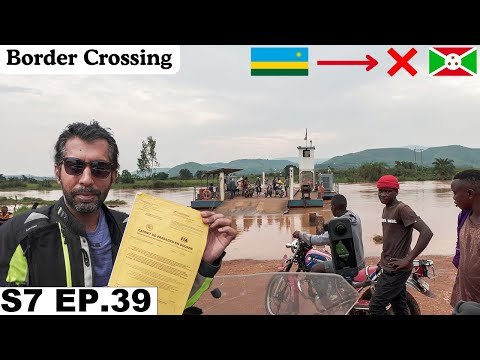
However, an unexpected turn of events meant a change of plans. Just before Abrar’s arrival, the direct border between Rwanda and Burundi had been closed due to recent security concerns. This unexpected closure meant a significant detour was necessary. Instead of a direct route, Abrar would now navigate to the Tanzanian border, an approximately 170-kilometer ride, then travel another 50-60 kilometers within Tanzania to reach the operational border with Burundi. Despite the added mileage and complexity, the decision was firm: Burundi was still on the itinerary, promising new experiences and sights.
Fueling Up for the Journey
With two border crossings ahead, a hearty breakfast was essential. Abrar enjoyed a spread of fresh fruits, including banana, mango, papaya, watermelon, and passion fruit. Complementing these tropical delights were delicious pancakes, made even better with a generous drizzle of honey.
Rwanda is renowned for its exceptional coffee, particularly from the Lake Kivu region. Abrar savored a cup of this exquisite coffee, noting how beautifully it was served, a testament to the country’s coffee culture.
Setting off around 8:30 AM on a Sunday, the city felt quieter than usual with most shops closed. Before hitting the road, Abrar offered a prayer for a smooth, memorable, and trouble-free day, hoping for pleasant weather and seamless border procedures. The conditions were overcast, with temperatures hovering around 20-21 degrees Celsius, a familiar climate since departing from Kampala.
Riding Through Rwanda’s Green Landscapes
The motorcycle journey from Kigali began by setting the Tanzanian border, roughly 160 kilometers away, as the navigation destination. Initial estimates suggested a little over three hours of riding. Rwanda’s roads had been excellent throughout Abrar’s travels, with only one 50-kilometer patch previously under construction. The expectation was for smooth asphalt and minimal traffic, especially on a Sunday.
Soon after departing Kigali, a light drizzle began, adding a refreshing element to the ride. The first 50-55 kilometers unfolded with beautiful curvy roads, enveloped in lush greenery. It was captivating to see how meticulously people had trimmed the plants by their houses, contributing to the country’s pristine appearance.
One notable observation along the route was the prevalence of bananas. A banana sign by a square hinted at the region’s agricultural focus, and indeed, bananas dominated the landscape for about 15 kilometers, reminiscent of Uganda’s rich banana-growing areas. Despite its small size, Rwanda boasts incredible variation in its landscapes, scenery, and even crops, ensuring the journey remained consistently engaging.
Prepared for the Unexpected
Passing through the Akagera region, known for its large national park and popular tourist attractions, Abrar decided to forgo a visit, having already experienced extensive wildlife viewing in Kenya and Tanzania. The journey continued, revealing locals diligently cleaning the roads, a common sight in this exceptionally clean country.
Anticipating the long ride and potential lack of roadside cafes, Abrar wisely carried his own tea, nuts, and delicious date biscuits from Saudi Arabia. These provisions provided much-needed energy when cafes became scarce after the initial 15-20 kilometers of riding.
The Rusumo Border: Rwanda to Tanzania
Approaching the Rusumo border, the gateway between Rwanda and Tanzania, the air buzzed with activity. This one-stop border facility streamlined the process, with all immigration and customs formalities handled efficiently in a single location. The area saw significant truck traffic, likely carrying imported goods for landlocked Rwanda from the port of Dar es Salaam in Tanzania.
The river below marked the geographical boundary, signifying the imminent arrival in Tanzania. After about 1.5 hours, Abrar successfully completed all necessary procedures.
Navigating Border Formalities
- Rwanda Exit: Obtaining an exit stamp from Rwanda was straightforward and hassle-free.
- Tanzania Entry Visa: Fortunately, Abrar did not need a new Tanzanian visa. His existing three-month single-entry visa, obtained earlier for $50 USD, was still valid. East African Community rules allow reentry into Tanzania from other EAC countries on the same visa, unlike re-entry from outside the region, which would require a new one.
- Carnet de Passage: The Carnet received both an exit stamp from Rwanda and an entry stamp for Tanzania, with no additional charges incurred. An initial request for a $5 USD fee was eventually waived.
- Currency Exchange & Connectivity: Abrar converted his remaining Ugandan, Rwandan, and Kenyan currency into Tanzanian shillings. His existing Tanzanian SIM card provided uninterrupted internet access, eliminating the need to purchase a new one.
Having previously traveled through Tanzania undoubtedly contributed to the smooth and swift completion of all formalities.
Towards Kabanga: An Uncharted Path to Burundi
With Tanzania successfully entered, the next leg of the journey was to the Kabanga Border Crossing, the gateway to Burundi, located approximately 56-57 kilometers away. Navigation estimated an hour and a quarter to reach it. Abrar departed at 4:10 PM, hoping to arrive by 5:15 PM and cross into Burundi that same day. He once again offered a prayer for the safe continuation of his travels.
As he rode, a sense of apprehension mingled with excitement about Burundi, a country he noted was facing some volatility. The journey also brought a change in driving side; while Rwanda drives on the right, Tanzania, like many former British colonies in East Africa, drives on the left. Uncertainty loomed about Burundi’s driving side, which, as a former Belgian colony like Rwanda and Congo, might also be right-hand drive.
The Real African Adventure Begins
The road ahead soon revealed an unexpected challenge. The paved road gave way to a rough path, hinting that a river crossing was imminent. Communicating with locals proved difficult due to language barriers, with no English spoken. After waiting for nearly half an hour, a small ferry appeared, marking Abrar’s first-ever experience crossing a river with his motorcycle on such a vessel.
This experience, with its rugged terrain and unexpected detours, felt like a true immersion into what many perceive as “real Africa,” a stark contrast to the more developed and comfortable countries he had traversed earlier in his journey. The ferry itself was a rudimentary operation, moved across the river by ropes, adding a thrilling, if slightly scary, element to the day.
Abrar paid 500 shillings for the crossing, deeming it a small price for the unique experience and the only available option. Once off the ferry, the road deteriorated significantly, becoming so rough that speeds rarely exceeded 15 kilometers per hour. Google Maps had not indicated the ferry crossing, nor did its estimated 75-minute travel time accurately reflect the challenging conditions.
The detour forced by the closed Rwanda-Burundi border had transformed what would have been a mere 60-kilometer direct ride from Kigali into a much longer and more adventurous journey, complete with unpaved roads and deep puddles that tested the waterproof capabilities of his shoes. “We wanted an adventure and an adventure is what we are having,” Abrar mused, embracing the challenge.
As the ride continued, the road gradually improved, leading through proper African villages far removed from urban centers. The slow pace allowed Abrar to fully appreciate the beautiful scenery, the markets bustling with people selling fruits and vegetables, and the simple rhythms of life in these remote areas. Eventually, the asphalt road reappeared, marking the end of the picturesque off-road segment.
An Overnight Stop Before Burundi
Even with the improved road, it was 6:00 PM. Considering the uncertainty surrounding conditions in Burundi, including potential fuel issues, and the need to acquire a local SIM card, Abrar decided it was prudent to stay overnight in Tanzania and cross the border into Burundi the following morning during daylight hours. This approach would allow him to handle any formalities and logistics more easily.
Using Google Maps, he located the Alpha Hotel, which appeared promising from the outside. Upon arrival, his hunger took precedence, and dinner was ordered immediately. The hotel provided a small but decent room, a reasonable and common stopover for travelers heading to or from the border, costing around 11-12 USD (30,000 Tanzanian shillings).
Dinner consisted of tilapia served with french fries, a meal costing 10 USD. Abrar observed that prices in tourist-oriented areas of Tanzania seemed higher compared to Rwanda, where locals and foreigners often dined at the same establishments, leading to more affordable options.
Reflections on a Challenging Day
The day’s journey, filled with unexpected turns and a taste of true adventure, came to a restful close. Abrar reflected fondly on his time in Rwanda, praising its cleanliness and the friendliness of its people. The only sour note was an unreimbursed 75 USD confiscated by an ATM, a sum he had little hope of recovering.
This motorcycle journey, expertly navigated by WildLens by Abrar, proved that even well-laid plans can lead to unforeseen detours that transform a routine trip into an unforgettable African road trip. Every twist and turn unveiled a deeper connection with the continent, making the experience all the more rewarding.