Beyond the Meme: Uncovering the True Antarctic Story of the Viral Penguin
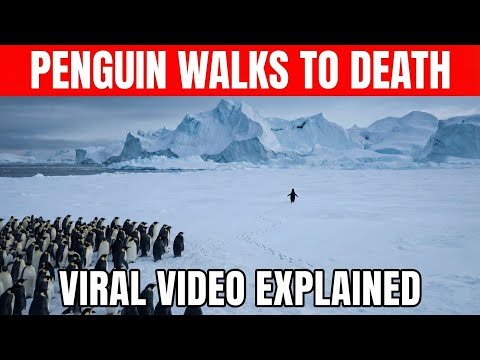
Millions worldwide have been captivated by a solitary penguin, seemingly marching toward the vast, icy mountains of Antarctica. This powerful imagery has sparked countless interpretations across social media, with many seeing it as a symbol of loneliness, rebellion, or even existential struggle. But what if the widely accepted narrative is far from the truth? Travel writer Truth Spell dives deep into the origins of this compelling footage to reveal a story far more fascinating and rooted in the extreme realities of the natural world.
The Origins of a Viral Sensation
This iconic moment stems from a remarkable 2007 documentary titled Encounters at the End of the World. Acclaimed German filmmaker Werner Herzog directed this exploration of life in Antarctica, delving into the lives of scientists, the unique extreme environments, and the peculiar behaviors found at the very edge of the world.
Amidst its captivating scenes, the film captures an Adélie penguin exhibiting truly unusual behavior. Instead of heading toward the ocean—its source of food and survival—this individual walks determinedly inland, away from its colony and toward the immense, frozen mountains of Antarctica.
A Scientific Anomaly, Not a Philosophical Choice
For a penguin, this solitary inland journey defies biological sense. The interior of Antarctica offers no food and presents almost certain death. Scientists featured in the documentary confirm that such behavior is exceedingly rare.
Penguins are inherently social creatures, relying heavily on their colony for protection and sustenance. When an individual separates in this manner, it typically indicates disorientation, illness, underlying neurological issues, or simply a rare behavioral anomaly. There is no scientific evidence to suggest the penguin made a conscious or emotional decision.
When Human Emotion Meets Animal Instinct
Despite the scientific explanation, the internet quickly assigned a new identity to the isolated bird. Viewers began labeling it the “nihilist penguin,” the “existential penguin,” or the “lonely rebel.” People projected their own human emotions onto the footage, transforming it into a powerful symbol of isolation, freedom, depression, or resistance against societal norms.
This viral interpretation speaks volumes about human psychology rather than actual animal behavior. Experts consistently remind us that animals do not operate with philosophical concepts like purpose or rebellion. The penguin was not making a statement; it was simply displaying a tragic, rare deviation from its natural patterns.
Werner Herzog’s Unsentimental Gaze
Werner Herzog included this particular scene in his documentary precisely because of his enduring fascination with the strange fringes of nature. His films often highlight moments where life appears mysterious, unsettling, and difficult to fully comprehend.
Herzog deliberately avoids romanticizing nature. Instead, he portrays it as an indifferent, often chaotic, and sometimes brutally cool force. The viral penguin, therefore, is real, and the footage is authentic, but the profound, symbolic meaning we attach to it is entirely our own creation.
The story of the lone Antarctic penguin serves as a potent reminder of how readily humans transform natural events into metaphors, especially within the fast-paced world of social media and short-form content. While the image undeniably resonates on an emotional level, understanding the scientific reality behind it offers an even deeper appreciation for the complexities of the natural world. Was this penguin a symbol of something profound, or merely a rare moment of nature, profoundly misunderstood by us?