
Kasur Unveiled: A Journey Through History, Sufi Lore, and Culinary Delights
Welcome to Kasur, Pakistan’s 24th largest city, a captivating destination situated just 50 kilometers from Lahore. This historical hub is a treasure trove of ancient buildings, revered Sufi shrines, and unique culinary traditions. From its intriguing past to its vibrant present, Kasur offers a rich tapestry of experiences for any traveler.
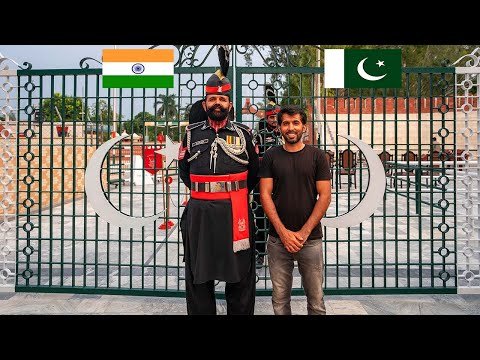
Join Abrar as he explores the heart of this remarkable city, delving into its historical sites, savoring its renowned foods, and witnessing the solemn flag ceremony at the international border. It’s a journey that promises to immerse you in the authentic spirit of Punjab.
Stepping Back in Time: Kasur’s Rich History
Abrar’s exploration began at the Kasur Railway Station, a site steeped in history. Before 1947, it served as a significant stop for the famous Mumbai-Peshawar train route, even connecting to Amritsar. While those international rail links are a thing of the past, the station remains a crucial hub, now serving as the first stop for the Fareed Express bound for Karachi.
Exploring Old City Kasur
The Old City of Kasur invites visitors to ponder its ancient origins. Traditional accounts suggest a deep historical connection, with some tales even linking it to the holy Hindu scripture of Ramayana. Legend has it that Kasur was named Kashawar, after Prince Kusha, the son of Lord Rama and his wife Seeta. This narrative mirrors the story of Lahore, said to be named Lahawar after Rama’s other son.
However, not all historians agree on this ancient lineage. Another perspective suggests the city was founded by Pashtuns who migrated from Afghanistan during the Mughal era. These skilled builders are credited with developing Kasur into a walled city, complete with forts and palaces. Yet another tradition proposes that the name “Kasur” derives from the Arabic word “Qasr,” meaning palace, hinting at a city of grandeur.
In the area of Kot Rukan Din, remnants of this past are still visible. An old building stands proudly, with a Hindu temple nearby. Two of the city’s original fort gates can still be seen here, a rare sight as most other gates have either been demolished or absorbed into the ever-growing urban landscape.
A Taste of Kasur: Culinary Delights
No visit to Kasur is complete without indulging in its famous local snacks and dishes. Abrar made a point to try some of the city’s most beloved treats.
The Sweet Intrigue of Andrassa
In a small yet bustling market, Abrar visited Asghar Sweets, a renowned shop famous for its ‘andrassa,’ a beloved Kasuri snack. Here, the crispy delicacy is made fresh, a treat to witness.
Andrassa is prepared using rice flour and sugar, and can be made in three distinct ways: plain sweet, with condensed milk, or with brown sugar. Abrar tried both the brown sugar and condensed milk versions. He found them delicious and unique, yet quite heavy, noting the distinct taste of frying oil, likely because they were fresh from the pan. Ultimately, he preferred the brown sugar andrassa for its distinctive flavor over the condensed milk variety, which he felt made it even heavier.
Spiritual Journeys: The Shrines of Kasur
Kasur is also a significant center for Sufi tradition, home to the shrines of revered saints that draw devotees and visitors alike seeking spiritual solace.
Baba Shah Kamal Chishti Shrine
Situated on a small hill just outside Kasur, along Ferozpur Road, stands the shrine of Baba Shah Kamal Chishti. He is celebrated as one of the many great Sufi saints of the Indo-Pak region, though details of his exact origin remain debated. Local belief holds that this shrine was the only structure to survive a devastating flood that once engulfed the entire city of Kasur, imbuing the place with a truly sacred ambiance.
Baba Bullhay Shah Shrine
Later in the day, Abrar visited the shrine of Baba Bullhay Shah, a name synonymous with Punjabi poetry and philosophy. Born in Uch Sharif in 1680 during the Mughal period, he pursued his education in Lahore before spending the major part of his life in Kasur.
Baba Bullhay Shah is widely regarded as the greatest Punjabi poet and philosopher of the 17th century. His contributions to the Punjabi language are unparalleled, and he is deeply respected and loved not only across India and Pakistan but also globally wherever Punjabi is understood. The shrine features a huge courtyard, and the ceiling inside is adorned with verses from his profound poetry. The atmosphere is further enriched by qawals, musicians who sit outside and perform qawali, adding a spiritual flavor to the surroundings.
The Ganda Singh Border: A Line of History and Ceremony
One of Kasur’s most poignant sites is the Ganda Singh Border, the international boundary between Pakistan and India. In the 1960s and 70s, it served as a primary crossing, remaining open until 1986. While today the Wahga Border is the main crossing point, Ganda Singh Border still hosts a smaller flag ceremony, echoing the grandeur of its larger counterpart.
The border takes its name from the adjacent village of Ganda Singh Wala and is located next to the BRB canal. While a normal day sees many tourists, Abrar observed that during his visit, entry was limited to those with prior permission. He was able to sit very close to the “zero line,” the actual international boundary. From this vantage point, he could see the seats on the Indian side, which appeared empty, suggesting that side might have been closed to the public due to prevailing circumstances.
Abrar described the flag ceremony as an exhilarating experience, especially given its close proximity to the border. Having previously witnessed the Wahga ceremony 15 years prior, he noted the unique intensity of being so near the demarcation line.
Practical Highlights for Visiting the Ganda Singh Border
- The flag ceremony typically takes place between 5:00 PM and 6:30 PM.
- To ensure you don’t miss it, plan to arrive before 5:00 PM.
Concluding with Kasur’s Signature Flavors
Back in Kasur city, Abrar dedicated his evening to sampling the city’s most famous culinary offerings: fish and faluda.
The Spicy Delight of Kasuri Fish
Kasur is renowned for its fish, and two establishments stand out: Javed Fish Corner and Driver Hotel. Abrar chose the latter, which came highly recommended. He tried the Rohu fish, a local specialty. As an avid fish lover, especially while traveling where halal options can be limited, he was delighted by the experience.
The Kasuri fish, rich in spices, was a revelation, far different from the simpler, unspiced preparations he often encounters in Europe. He expressed his deep enjoyment, calling it a truly flavorful treat.
Unmatched Kasuri Faluda
For dessert, Kasuri Faluda is a must-try, famed throughout the subcontinent. The best versions can be found at Nafees and Ayub’s. Abrar made his way to Ayub’s shop in the main market, visibly excited for this particular treat, as faluda is a personal favorite.
He added extra rabri to his faluda, savoring every spoonful. The taste of the rabri, he declared, was simply amazing. He enthusiastically recommended this faluda, describing it as truly unmatched.
A Memorable Conclusion
Abrar’s journey through Kasur was a truly rewarding experience, offering a blend of history, culture, and unforgettable flavors. While he couldn’t record inside the local museum, he encouraged others to visit it. He extended his heartfelt thanks to the kind gentlemen of Kasur who provided invaluable assistance during his exploration, concluding a memorable visit to this historically rich Pakistani city.